
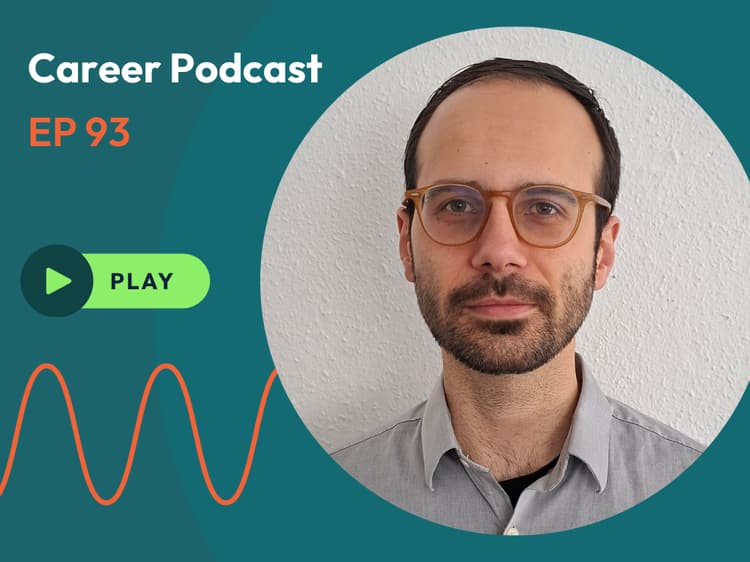
Listen to the full episode on the Impactpool Career Podcast.
The Danish Refugee Council operates in over 30 countries, many experiencing protracted conflicts and displacement crises. From Syria to Afghanistan, from Ukraine to Sudan, DRC maintains long-term operations that require building stable, skilled teams capable of working in challenging contexts, sometimes for years. Yet when emergencies do strike, the organization must also be ready to deploy specialized staff within days. Notably, DRC typically recruits for over 150 roles globally per month.
What does it really take to build a career in this sector?
And how do you design recruitment systems that work for both sustained programs and rapid response? In this episode of the Impactpool Podcast, we meet with Iosif Emmanouil Sofios, Recruitment Specialist at DRC, about the realities of humanitarian recruitment.
Key Takeaways
For Job Seekers:
-
Transferable skills from other sectors count; you don't need a perfect humanitarian CV
-
Demonstrate adaptability and cultural sensitivity through concrete examples
-
Be intentional: match your experience to what's required vs. desirable in job descriptions
-
Motivation and learning mindset often matter more than perfect skills alignment
For Organizations:
-
Balance consistency (standardized templates) with flexibility (local adaptation)
-
Emergency hiring requires speed but safeguarding standards are non-negotiable
-
Clearer role titles and career pathways would attract more diverse talent
From Psychology to Humanitarian HR
With an academic background in psychology and a drive to help others, Iosif started at DRC's Greece country office, focusing on recruitment within broader HR responsibilities. After several years in the field, he moved to DRC headquarters in Copenhagen four years ago, where he now shapes global recruitment systems and policies.
What Really Matters in Applications
DRC looks beyond degrees and experience to assess motivation, adaptability, and core competencies like collaboration and integrity. Transferable experience counts: volunteering, other sectors, cross-cultural work. "You don't need a perfect humanitarian CV," Iosif reassures, "but you do need to show how your skills translate to this work."
The Danish Refugee Council is an equal opportunity employer that considers all applicants based on individual merit and qualifications, regardless of personal characteristics or attributes.
Human skills that don't appear on CVs, such as cultural sensitivity, resilience, and teamwork, emerge in the stories candidates share about applying skills and making decisions under pressure. His advice: "Identify what's required versus desirable, and show it in your examples. That's what helps someone stand out."
AI Implementation and Authentic Branding
DRC is exploring AI tools for screening and matching, but carefully. "Any tool must support fairness and transparency, not replace human judgment, especially when dealing with vulnerable populations," Iosif emphasizes.
On employer branding, authenticity matters. DRC focuses on meaningful work and professional development while being transparent about challenges. "If we oversell or aren't realistic, we create mismatches that don't serve anyone; not the employee, not the organization, and not the populations we serve."
The Need for Clearer Career Pathways
Iosif identifies one crucial change: greater clarity in how roles and career pathways are communicated. A job title like "officer" means different seniority levels across organizations. The same work might be "MEAL" in one place and "Impact and Learning" elsewhere. This confuses candidates about where they fit and how to progress.
"More shared language would help organizations and candidates make better matches," Iosif suggests. Clearer descriptions would also help people with transferable skills recognize how their experience adds value.
You're More Ready Than You Think
For anyone considering humanitarian work but uncertain about readiness, Iosif offers this: "Skills gaps are normal when transitioning. If you meet the essential requirements and can articulate your motivation and learning mindset, you're likely more ready than you think."